
Customer lifetime value is the single most useful number in marketing, and most businesses set their budgets without it. It answers a deceptively simple question: how much is one customer actually worth to you over the entire relationship — not just on the first sale?
Once you know that number, the hardest decisions in marketing get easier. How much can you afford to spend to win a customer? Which audiences deserve the budget? Is it smarter to chase new logos or keep the ones you have? This guide walks through what customer lifetime value is, how to calculate it without a data team, and how to use it to spend with confidence.
What is customer lifetime value?
Customer lifetime value (often shortened to CLV or LTV) is the total profit you expect to earn from a single customer across the whole time they do business with you. A first purchase is a snapshot. Lifetime value is the full picture — repeat orders, renewals, upgrades, and referrals, minus what it costs you to serve them.
The shift in thinking matters. A coffee shop that sees a $5 latte is pricing one transaction. A coffee shop that sees a regular worth $1,800 over three years makes very different decisions about loyalty, service, and how hard to work to earn a second visit.
Why customer lifetime value matters
Without lifetime value, marketing looks like a cost to be minimized. With it, marketing becomes an investment with a measurable return. That single reframe changes how budgets get argued for and approved.
It also corrects a common bias. Teams over-invest in the cheapest customers to acquire and under-invest in the most valuable ones to keep. Lifetime value puts the focus where the money actually is: the relationships that compound.
How to calculate customer lifetime value
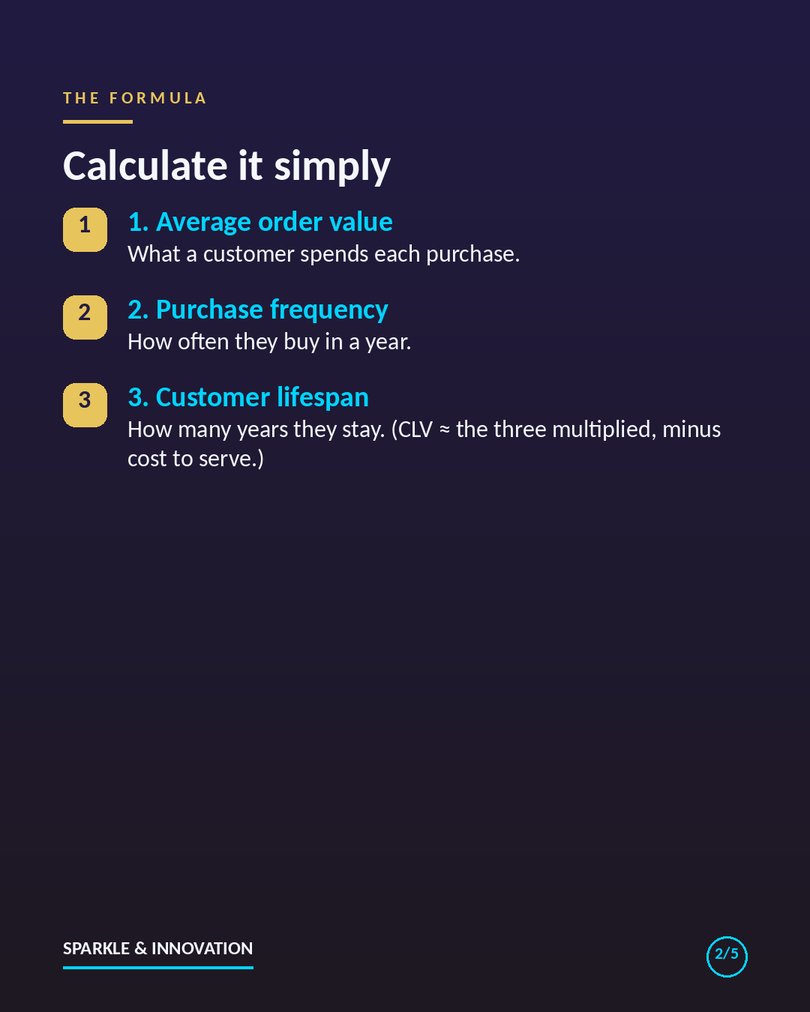
You do not need a data science team to get a useful estimate. A workable version uses three inputs:
- Average order value: what a customer spends per purchase.
- Purchase frequency: how many times they buy in a year.
- Customer lifespan: how many years they typically stay.
Multiply the three together, then subtract your cost to serve that customer. In short: CLV ≈ (average order value × purchase frequency × lifespan) − cost to serve. It is an estimate, not an audit, and an estimate is enough to make better decisions.
A worked example
Say a customer spends $60 per order, buys six times a year, and stays for four years. That is $60 × 6 × 4 = $1,440 in revenue. If it costs you roughly $240 to serve them over that period, their lifetime value is about $1,200. Now you know the most you can rationally invest to win and keep a customer like this — and you can stop guessing.
LTV to CAC: the ratio that sets your budget
Lifetime value only becomes powerful when you pair it with customer acquisition cost (CAC) — what you spend to win a customer. The relationship between the two, the LTV-to-CAC ratio, is one of the clearest signals of whether your growth is healthy.
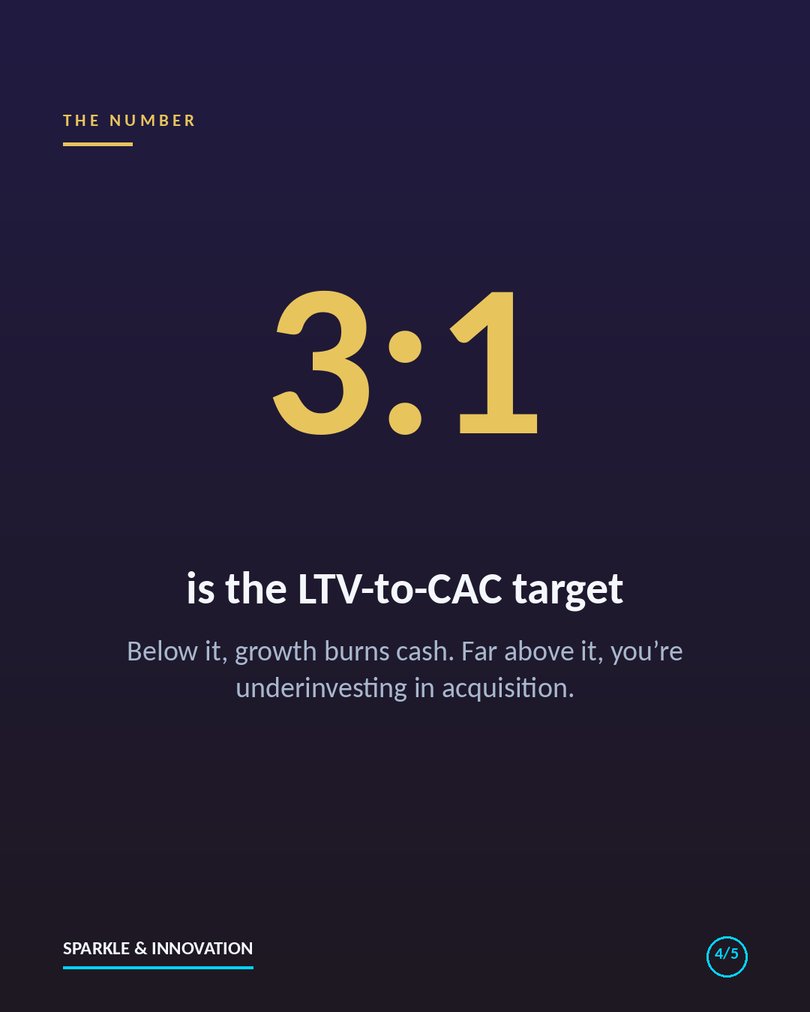
A widely used benchmark is roughly 3:1. Below it, you are spending too much to acquire customers relative to what they return, and growth quietly burns cash. Far above it, you are likely underinvesting and leaving growth on the table. The ratio is not a law of nature, but it is a useful gut-check before you scale spend.
Five ways to increase customer lifetime value
Because lifespan and frequency are multipliers in the formula, small improvements compound. Five practical levers:
- Improve the first experience. A strong onboarding or first visit sets the tone for the whole relationship. The way you improve customer experience directly extends lifespan.
- Build a reason to return. Thoughtful loyalty programs raise both frequency and retention.
- Stay in touch. A simple email program keeps you top of mind between purchases.
- Price for value. Knowing what a customer is worth gives you the confidence to raise prices without losing customers.
- Serve your best segments deliberately. Especially in B2B marketing, a handful of high-value accounts can outweigh dozens of small ones.
Common mistakes to avoid
Three traps catch most teams. First, measuring revenue instead of profit — a high-revenue customer who is expensive to serve may be worth less than a quieter, low-maintenance one. Second, treating every customer as average — blended numbers hide your best and worst segments. Third, setting acquisition spend against last year’s budget instead of against a known lifetime value.
For deeper background, Investopedia’s primer on customer lifetime value is a solid reference, and Harvard Business Review’s work on keeping the right customers makes the retention case in detail.
Where to start
Pick one customer segment. Estimate the three inputs — average order value, purchase frequency, and lifespan — and subtract a rough cost to serve. You now have a lifetime value number and a ceiling for acquisition spend. From there, the budget conversation stops being a matter of opinion and starts being a matter of math.
Lifetime value is what turns marketing from a line item you defend into an investment you can size with confidence. If you want help building yours, that is exactly the kind of work we do at Sparkle and Innovation — let’s talk.