
A pipe bursts at 11 p.m. Nobody in that kitchen is reading websites or comparing logos. They pick up a phone, type “emergency plumber near me” and call one of the first three businesses on the map. That small box of results is where most local service calls are won or lost, and getting into it on purpose is what map engine optimization is about.
This guide walks through an illustrative model case: a local plumber who wants to become the first call in town. It is not a client result. It is a practical blueprint you can apply to any home-service or neighbourhood business, from electricians to dental clinics.
What Is Map Engine Optimization (MEO)?
Map engine optimization, often shortened to MEO, is the work of improving how a business appears in map-based search results: the local pack in Google Search and the listings inside Google Maps. Traditional SEO focuses on ranking web pages. MEO focuses on your Business Profile, your reviews, your location signals and how quickly you respond when someone finds you.
For a local business the two work together. Your website supports relevance and trust. Your map listing is often the first and only thing a customer sees before they decide to call. If you want the wider picture first, our marketing and SEO guide covers how search fits into a full growth plan.
How Google Ranks Local Results
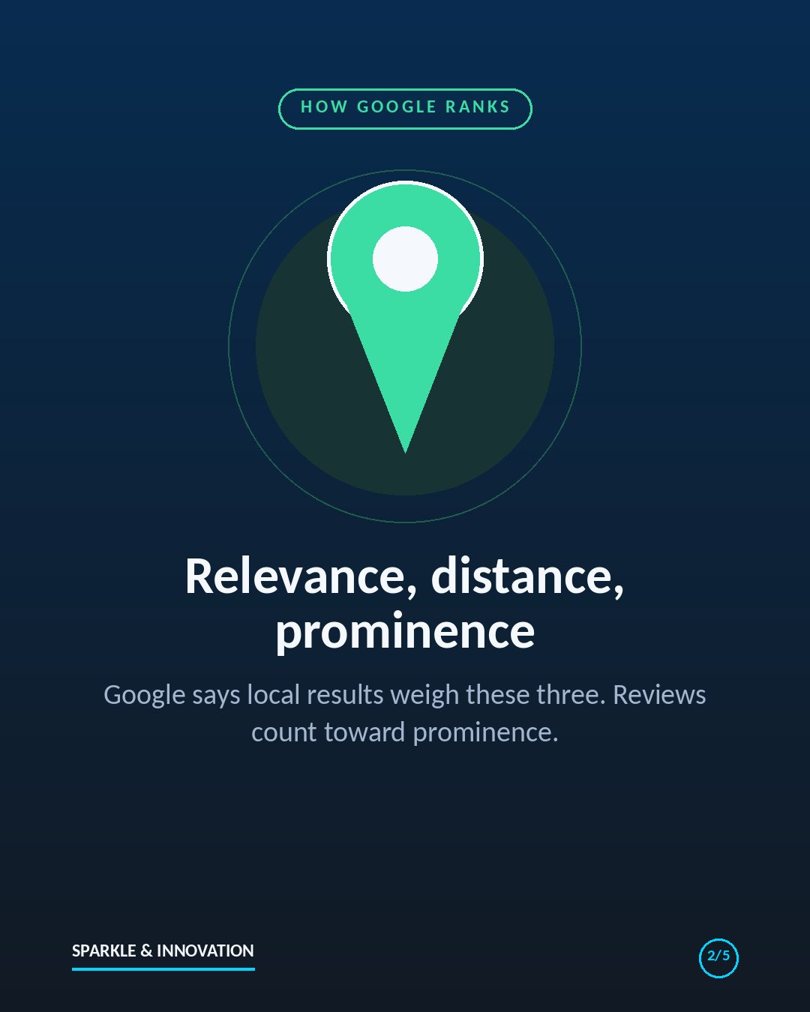
Google has been unusually open about this. Its own help page, Tips to improve your local ranking on Google, says local results are based mainly on three factors:
- Relevance: how well your profile matches what someone searched for.
- Distance: how far your business is from the person searching, or from the location in their search.
- Prominence: how well known your business is, including links, articles and reviews. Google notes that review count and rating factor into local ranking.
Distance is mostly fixed. You cannot move your shop closer to every customer. That leaves two levers you control every week: relevance and prominence. Then there is a third factor Google does not rank, but customers do: speed.
Why the Brain Calls the First Name It Sees
In an emergency, people do not optimize. They satisfice: they choose the first option that looks good enough. Herbert Simon described this decades ago, and it is especially strong under stress and time pressure. A homeowner with water on the floor is not reading ten profiles. They scan the top results for a few quick signals and act.
Those signals are simple heuristics. A star rating with a healthy number of reviews says “other people trusted them.” Hours that say “Open 24 hours” say “they will pick up.” A photo of a real van and a real technician says “this is a real local business.” This is social proof and availability doing the work in about three seconds. Map engine optimization is really the craft of making those three seconds go your way.
Step 1: Make Your Business Profile Complete and Exact
Relevance starts with a profile that tells Google, and customers, exactly what you do and where.
- Primary category: choose the most specific one, such as “Plumber,” then add secondary categories only if you truly offer them.
- Services: list real services in the words customers use: drain cleaning, water heater repair, emergency plumbing.
- Service areas: name the neighbourhoods and towns you actually cover, not the whole province.
- Hours: keep regular and holiday hours accurate. If you offer after-hours calls, say so clearly.
- Photos: add your van, your team and finished jobs. Real photos beat stock images.
- Name, address and phone: keep them identical on your website and major directories.
Most local profiles we audit are missing at least two of these. Each gap is a small reason for Google, and for a stressed customer, to choose someone else.
Step 2: Build a Steady Flow of Genuine Reviews
Prominence grows with reviews, and the pattern matters as much as the total. Ten reviews in one week and nothing for a year looks odd to people. A steady trickle looks like a busy, trusted business.
The simplest system for a plumber:
- Send a short review link by text the same day the job is finished, while the relief is fresh.
- Make it one tap: a direct link to your review form, not “find us on Google.”
- Ask every customer, not only the ones you expect to be happy.
We cover more ways to do this in our guide to increasing online reviews.
Step 3: Reply to Every Review Within a Day
Google’s help page recommends replying to reviews, and customers read the replies. A thoughtful response to a three-star review often does more for trust than another five-star rating. It shows that a real person runs the business and fixes problems.
Keep replies short and specific. Thank the customer by name, mention the job, and if something went wrong, say what you will do about it. Never argue in public.
Step 4: Win on Speed, Not Only on Rank
For urgent services, ranking gets you seen, but speed gets you hired. If the first plumber does not answer, the customer calls the second one within seconds. That means:
- A phone number on the profile that rings a person or a well-run answering service, day and night if you advertise it.
- Messages and quote requests answered within minutes during working hours.
- Hours that are true. A listing that says “Open now” and goes to voicemail damages trust fast.
Speed also feeds the first two levers. Fast service creates happier customers, and happier customers leave better reviews. This connects directly to the broader work of improving customer experience.

The Catch: When Map Engine Optimization Backfires
Once people learn that reviews and categories move rankings, the shortcuts start. Buying reviews. Asking friends and family to post. Offering a discount in exchange for five stars. Sending review links only to customers you know were happy. Stuffing keywords like “Best Cheap Emergency Plumber Vancouver” into the business name. Listing a fake address in a town you do not serve.
These tactics backfire for three reasons. First, Google’s review policies prohibit fake and incentivized reviews, and profiles caught breaking the rules can have reviews removed or the listing suspended. Second, customers are getting good at spotting patterns: a wall of vague five-star reviews posted in the same week reads as fake, and one exposed fake review can undo years of real ones. Third, regulators in Canada and the U.S. treat fake reviews as misleading advertising, so the risk is not only to your ranking.
The honest version is also the one that lasts: ask every customer the same way, let the rating reflect your real service, keep your real business name, and fix the problems that bad reviews point to. Map engine optimization works best when it makes a good business easier to find, not when it disguises an average one.
A 30-Day MEO Plan for a Local Plumber
- Week 1: Audit the profile. Fix categories, services, service areas, hours and phone. Add ten real photos.
- Week 2: Set up a same-day review text with a one-tap link. Send it after every job.
- Week 3: Reply to every existing review, oldest unanswered first. Set a daily reply habit.
- Week 4: Test your own speed. Call your number after hours and send a message through the profile. Fix what you find.
Then measure calls, direction requests and website clicks in your Business Profile performance report each month. Rankings move gradually; the habits are what compound.
Map Engine Optimization FAQ
What is MEO for a business?
MEO for a business means improving how it shows up in Google Maps and the local pack, so nearby customers find it, trust it and contact it. It covers the Business Profile, reviews, photos, hours, and how fast the business responds.
Is MEO different from local SEO?
The terms overlap. Local SEO usually includes your website, local landing pages and directory listings as well as your map presence. MEO puts the map listing at the centre, because for many service businesses that listing is where the customer decides.
How long does map engine optimization take to work?
Fixing profile basics can help within weeks, but reviews and prominence build over months. Plan for a steady 90-day routine rather than a one-time cleanup, and track calls and direction requests rather than rank alone.
Do I need a physical shop to appear on the map?
No. Service-area businesses such as plumbers can hide their address and list the areas they serve instead. What matters is that the areas are real and the business is genuinely reachable there.
Key Takeaway
Map engine optimization is not a trick. It is three habits done consistently: be findable with a complete and accurate profile, be trusted with a steady flow of genuine reviews and real replies, and be quick when the phone rings. Customers in a hurry choose the first business that looks reliable. Your job is to be that business, honestly.
Want a Second Pair of Eyes on Your Map Listing?
If you are not sure where your profile stands, we can help. Learn more about our map engine optimization services, or contact Sparkle & Innovation and ask for a free 15-minute marketing audit. You can also DM us “AUDIT” on Instagram.