
A good headline makes you feel a small, specific itch. You know part of the story, you want the rest, and the only way to get it is to keep reading. That itch has a name: the curiosity gap. Used well, curiosity gap marketing is one of the most reliable ways to earn attention in a crowded feed. Used badly, it turns into clickbait that trains people to ignore you.
This guide explains where the idea comes from, why it works on the human brain, how to write hooks that open a real gap, and where the line sits between a strong tease and a broken promise.
What Is the Curiosity Gap?
The curiosity gap is the space between what a person knows and what they want to know. When attention lands on that space, people feel a mild sense of deprivation, and they act to close it: they click, read, watch or ask.
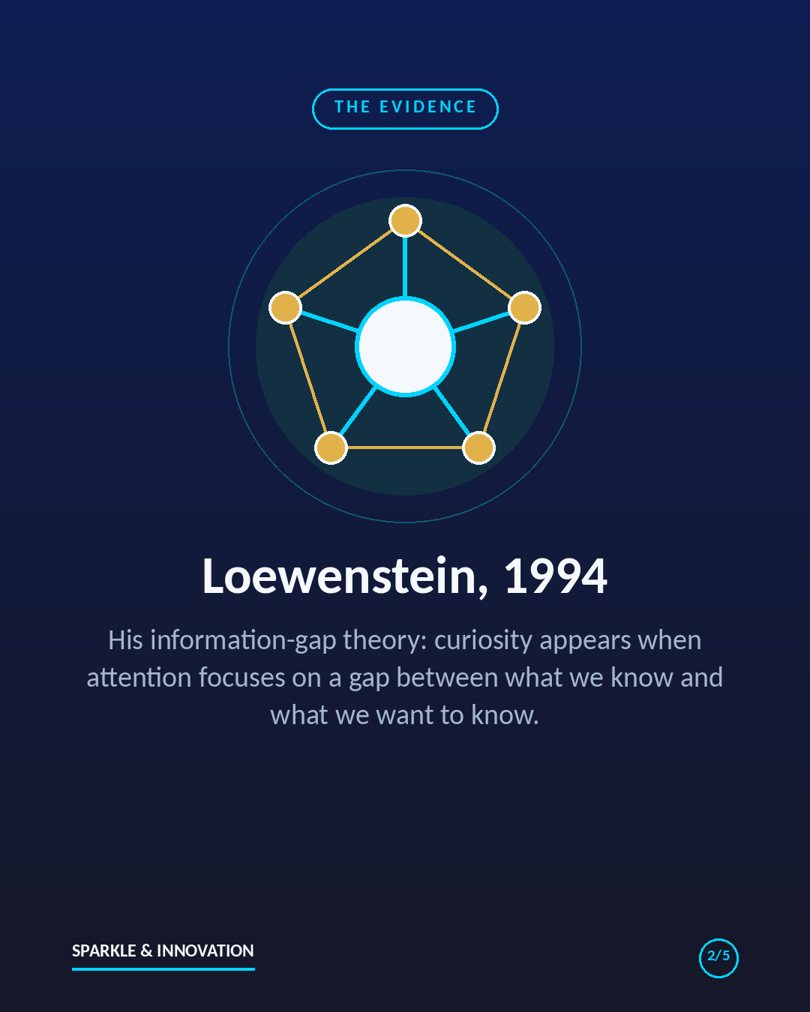
The idea comes from behavioural economist George Loewenstein. In 1994 he proposed the information-gap theory of curiosity. His key point was that curiosity is not a constant trait that is simply switched on. It appears when something draws our attention to a specific gap in our knowledge. Researchers still use his framework as a starting point; a scoping review of curiosity research traces how the field has measured and extended it.
Two details matter for marketers:
- The gap has to be noticed. People do not feel curious about things they have no idea they are missing.
- The gap has to feel closable. If the missing piece seems huge or vague, people give up instead of leaning in.
Why the Curiosity Gap Works on the Brain
Curiosity behaves a lot like a small appetite. Wanting information pulls attention toward the source that promises it, and closing the gap feels rewarding. That is why an unanswered question keeps nagging at you, and why the end of a cliffhanger episode makes the next one hard to resist.
Three conditions make the pull stronger:
- Some prior knowledge. Curiosity peaks when people know a little, not nothing. A reader who already cares about checkout conversion feels the gap in “the one checkout change we tested” far more than someone who has never run an online store.
- Specificity. “One change” or “three numbers” sounds finite. Finite gaps feel worth closing.
- Relevance. The gap has to sit next to something the reader already wants: more customers, fewer no-shows, less wasted ad spend.
Specific Hooks vs. Empty Hooks
Most weak headlines fail for the same reason: they announce that something is interesting without giving the reader anything specific to want. Compare these pairs:
- Empty: “You won’t believe what happened.” Specific: “The one checkout change that cut our cart abandonment.”
- Empty: “This changes everything for small businesses.” Specific: “Why salons that ask for a $20 deposit see fewer no-shows.”
- Empty: “The secret to better emails.” Specific: “The subject line pattern our best-performing emails share.”
The specific version tells the reader what kind of answer is coming. That makes the gap visible and closable at the same time. The empty version asks for blind trust, and most readers have been burned enough times to refuse.
How to Write a Curiosity Gap Headline
A simple structure works for social posts, email subject lines, ad copy and blog titles:
- Name the context. Who is this for, or what situation is it about? (“For clinics,” “At checkout,” “Before Black Friday.”)
- Point at a concrete payoff. One change, one number, one mistake, one pattern.
- Hold back only the answer. Give away enough that the reader knows the answer exists and matters to them.
Then check the headline against one question: if I deliver exactly what this promises, will the reader feel it was worth the click? If not, the hook is writing a cheque the content cannot cash.
If you want a deeper look at matching hooks to the right reader, our guide on how to define your target audience walks through the groundwork.
Curiosity Gap Examples for Small Businesses
The curiosity gap is not just for media companies. Here is how it can look for local and B2B businesses, with the payoff the content must deliver:
- Dental or physio clinic: “The one question we ask that cuts missed appointments.” Payoff: the actual question, the script, and when to ask it.
- Restaurant or café: “Why our slowest Tuesday became our second-best night.” Payoff: the specific change (a set menu, a community night, a pre-order) and what it did to covers.
- Home services: “The three photos that win us quotes before we arrive.” Payoff: the three photos and why each one builds trust.
- B2B software or consulting: “The onboarding email that halved our support tickets.” Payoff: the email itself, or at least its structure.
- Retail: “What our best customers buy on their second visit.” Payoff: the product pattern and how you now display it.
Notice that every example is something the business already knows. You do not need a viral secret. You need a real answer your audience has not heard yet, framed so they notice they are missing it.
Where to Use the Curiosity Gap in Your Marketing
- Carousel covers and first lines. On Instagram and LinkedIn, the first slide or first line decides whether anyone sees the rest. A specific question on the cover earns the swipe.
- Email subject lines. A subject line that names the payoff (“3 numbers to check before you renew your lease”) opens the gap in the inbox.
- Video openings. State the question in the first two seconds, answer it before the end.
- Landing page sections. Each section heading can open a small gap that the next paragraph closes, keeping people scrolling toward the offer.
Curiosity also pairs well with other principles. A real deadline adds urgency, as covered in our piece on scarcity marketing, and framing what a customer stands to lose can sharpen a hook, as explained in loss aversion in marketing.
Pay It Off Fast
Opening the gap is only half the job. The other half is closing it quickly and generously. Readers who click on a curiosity hook arrive with a question in their head. Every paragraph that delays the answer drains goodwill.
- Answer the headline’s question on the first screen, then expand.
- Make the payoff at least as specific as the promise.
- Add one thing the reader did not expect: an example, a number, a template. That surplus is what makes them open the next post.
For more ways to keep people engaged after the click, see our guide to increasing customer engagement.
The Catch: When the Curiosity Gap Backfires
The curiosity gap is easy to abuse, and the abuse is everywhere: “You’ll never guess what happened next,” thumbnails that promise something the video never shows, subject lines that hint at urgent news and open on a sales pitch.
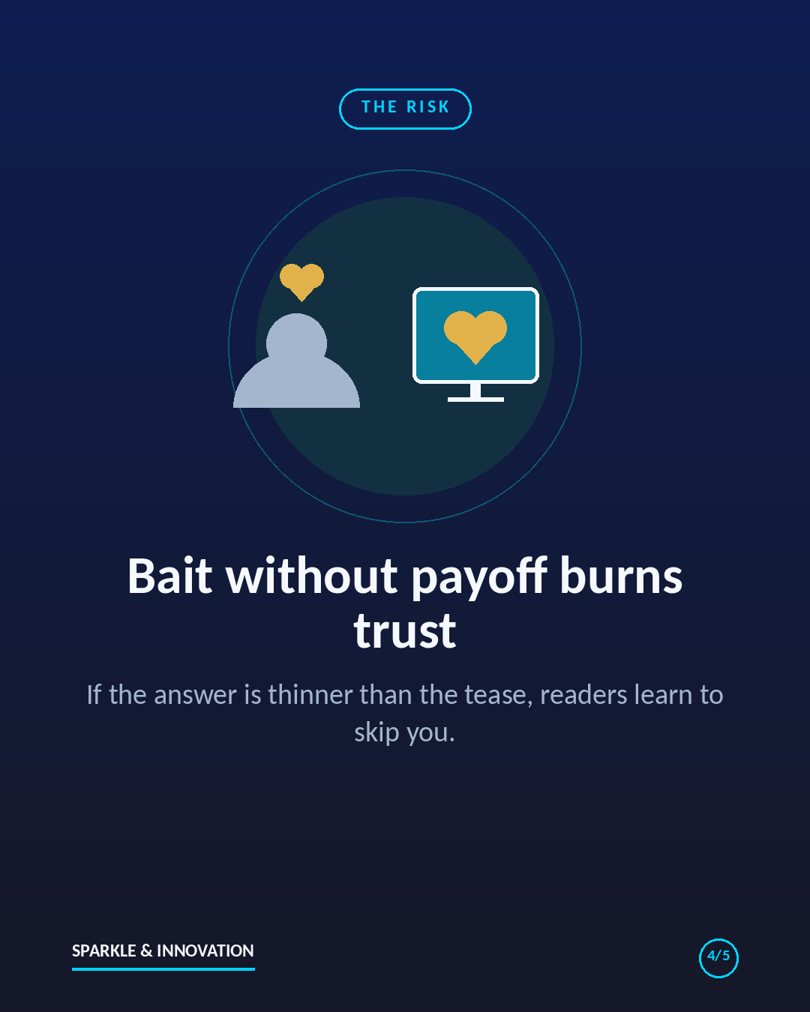
It backfires for a simple reason. Every time the payoff is thinner than the tease, the reader learns that your hooks are not to be trusted. People adapt quickly. After a few empty promises, your headline stops opening a gap and starts triggering a skip. Platforms notice too: when people click and leave right away, that signal tends to work against you, not for you. And a hook that misstates what is inside, such as a fake “your order has shipped” subject line on a promotional email, can cross from annoying into misleading.
The honest version is easy to describe and harder to do well:
- Only tease answers you will actually deliver, in full.
- Keep the hook and the content about the same thing.
- Deliver the payoff early. Curiosity earns the click; usefulness earns the next one.
Curiosity Gap FAQ
Is the curiosity gap the same as clickbait?
No. Clickbait uses the curiosity gap without paying it off. A curiosity gap headline becomes clickbait the moment the content fails to deliver what the hook implied.
How many curiosity hooks should I use?
Use one strong gap per piece of content. Stacking teases (“and wait until you see number five”) wears out attention quickly. Mix curiosity hooks with direct, benefit-led headlines so your audience does not feel managed.
Does the curiosity gap work in B2B marketing?
Yes, often better, because B2B buyers already have context. A finance lead who knows their churn number feels the gap in “the renewal signal most teams miss” immediately. Keep the payoff concrete and verifiable.
Key Takeaway
The curiosity gap works because the brain wants to close open questions. Open a specific, relevant gap, then close it fast with something worth the click. Tease a real answer, then deliver it, and your hooks get stronger over time instead of weaker.
Want a Second Pair of Eyes on Your Hooks?
If your posts get seen but not read, the first line is often the problem. DM us “AUDIT” on Instagram or contact us, and we’ll send you a link to book a free 15-minute marketing audit. We’ll look at your hooks, your offers and where attention is leaking.
Marketing starts with understanding the human brain. – Sparkle & Innovation